© 2024 Alexis Wegner - Tous droits réservés

Side Project : LEGO Mechanical Walker

This page is about a different creative project that took shape through several iterations, without any specific objective at the start. It quickly turned into a satisfying evening hobby.
The results are showcased here together with the approach and the different steps, as a humble contribution to the online knowledge in this matter.

Chronological Flashback
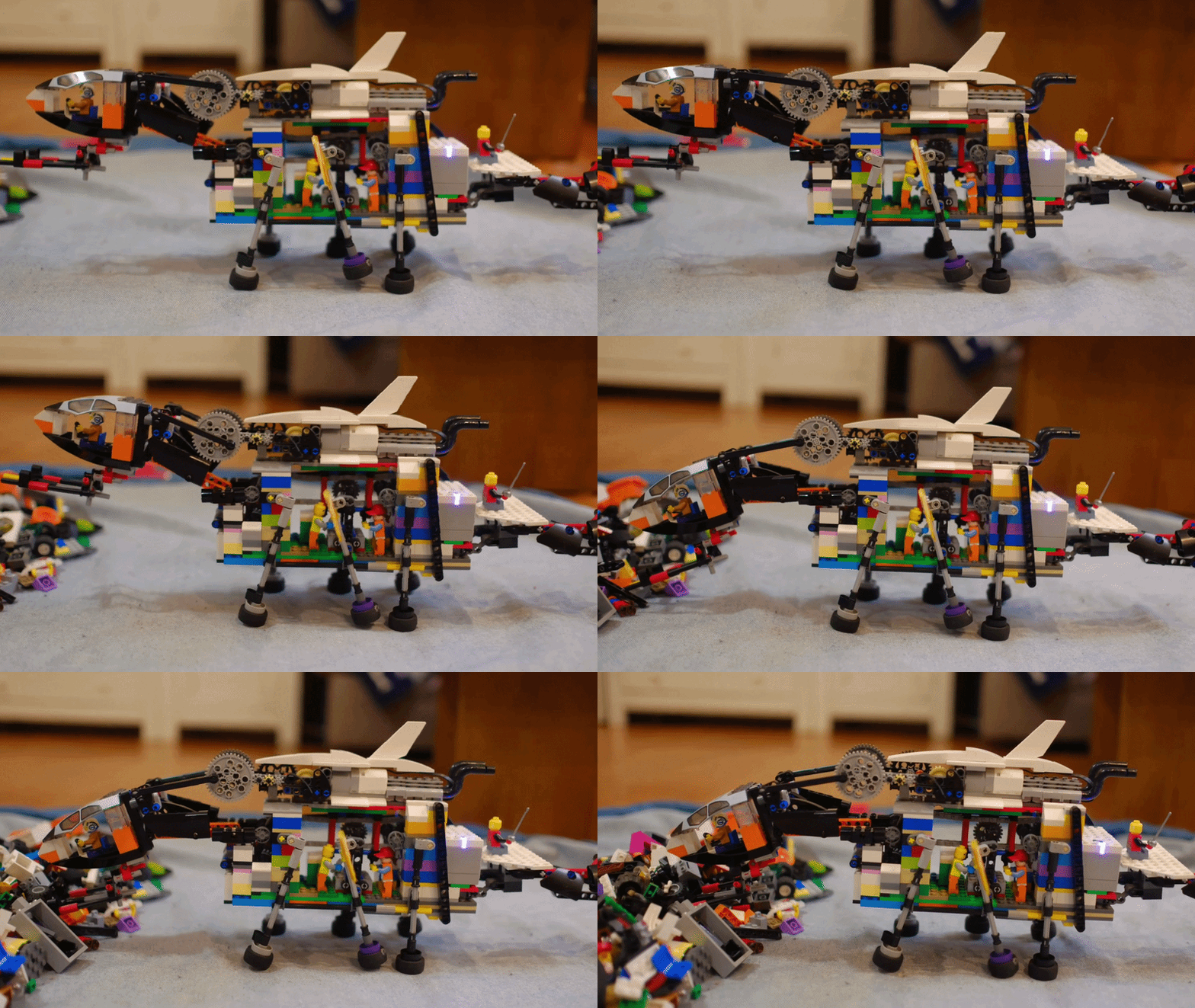
Below you can see the first walking model I built for my kids two years ago, in a "Steampunk" spirit. Right from the start, 6 legs seemed like the most suitable configuration to ensure good stability while keeping the design simple. The leg mechanism itself was very basic as shown on the animation on the right.
Note: All leg mechanism animations shown on this page have been made with "Linkage" freeware - © David Rector.
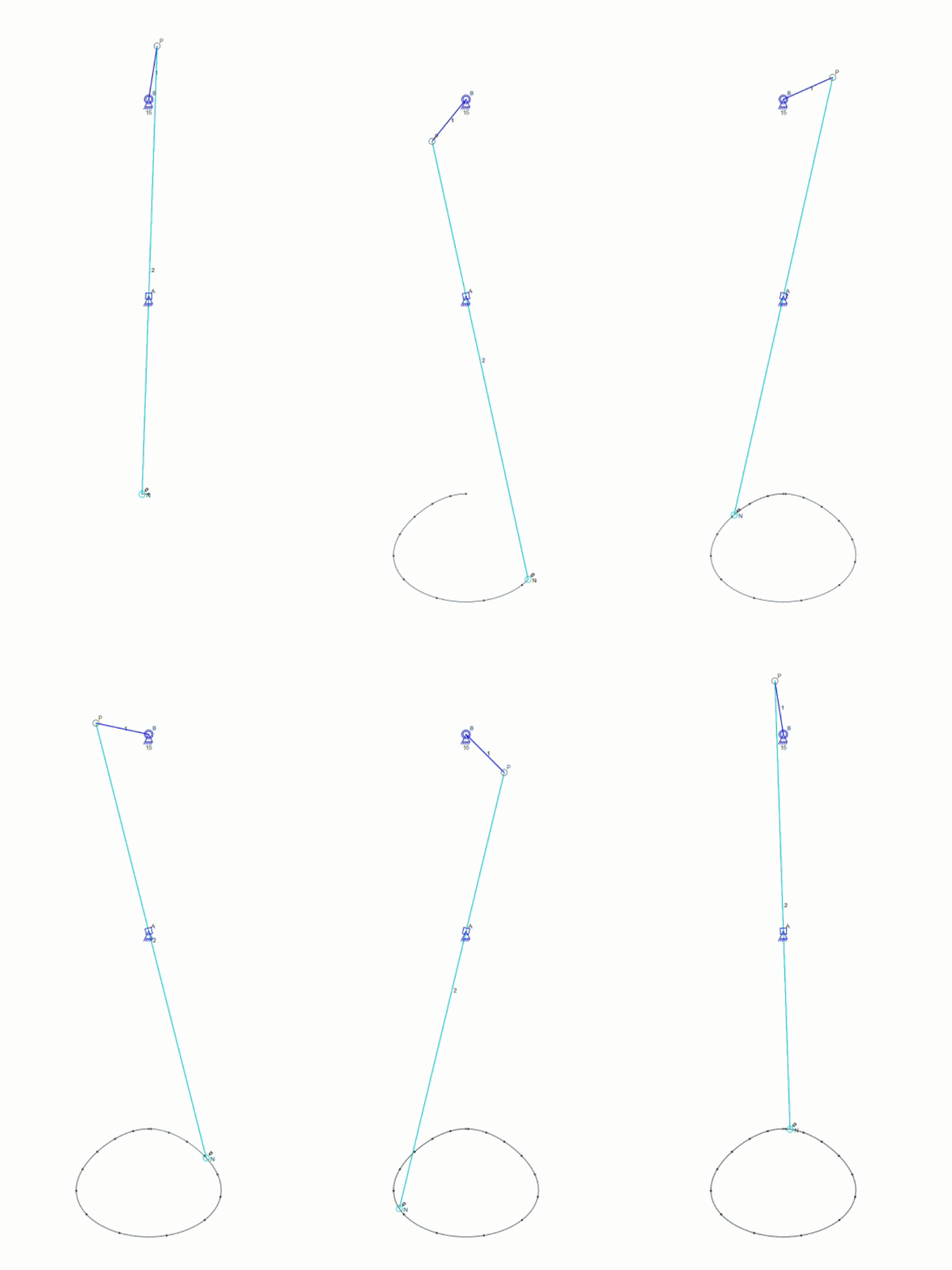
Obviously, this model was not robust enough for kids to play with, so the next build relied on LEGO Technic parts. It was able able to spin around — though not very smoothly — and climb over difficult obstacles. The leg mechanism was slightly improved resulting in more robust and oval-shaped steps.
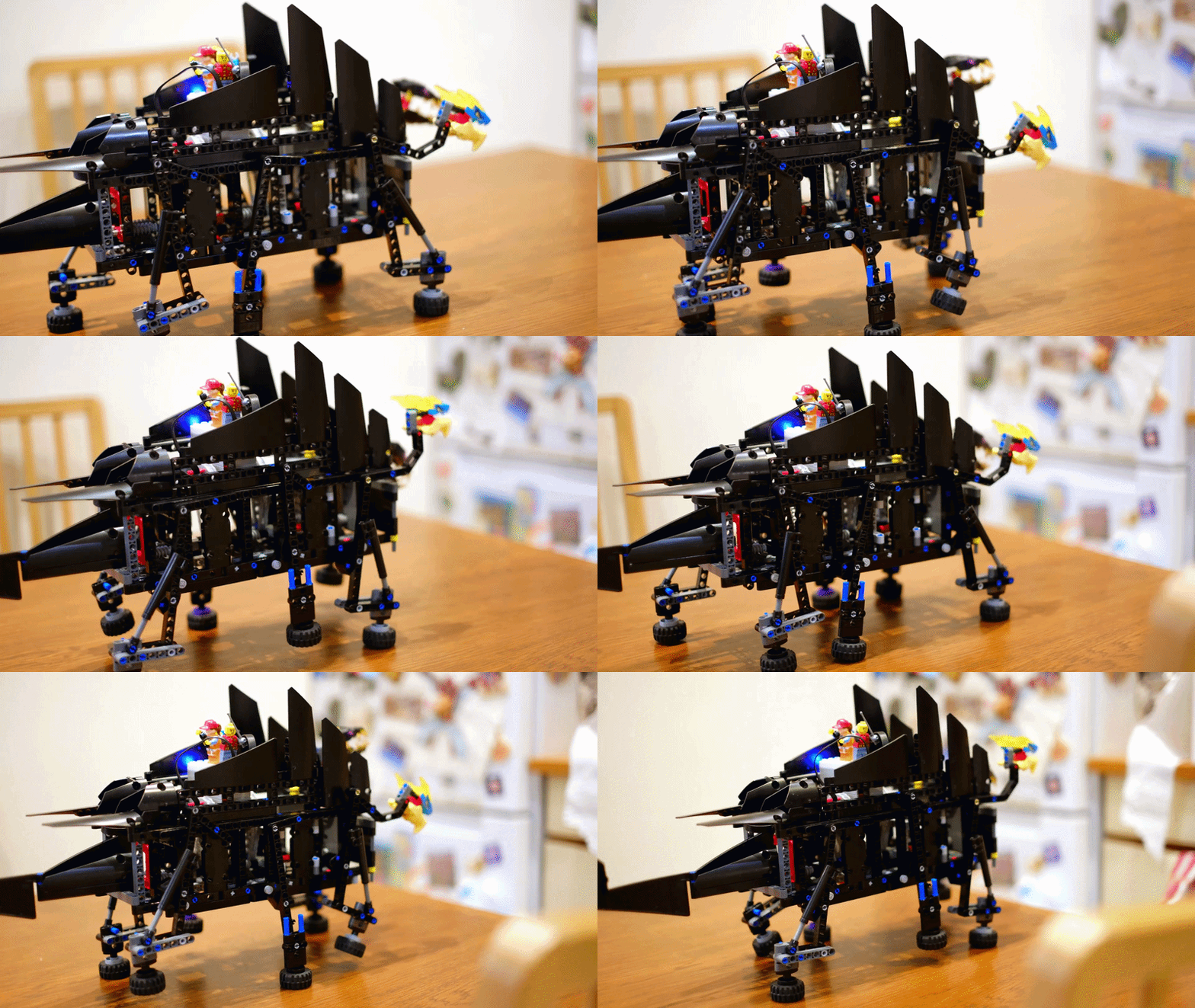
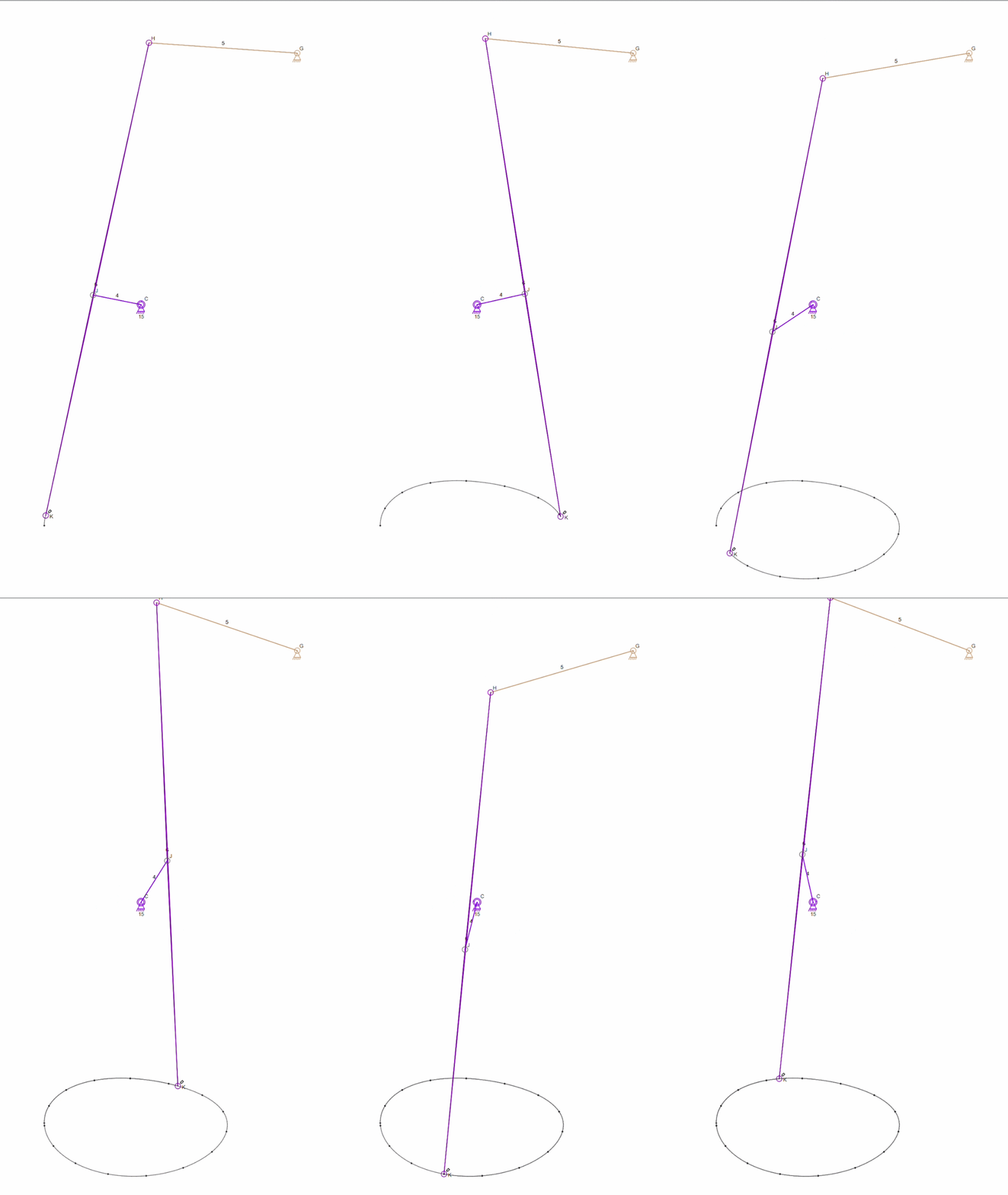

Another intermediate model relied on 8 legs and a turntable to allow for a more natural way of turning around.

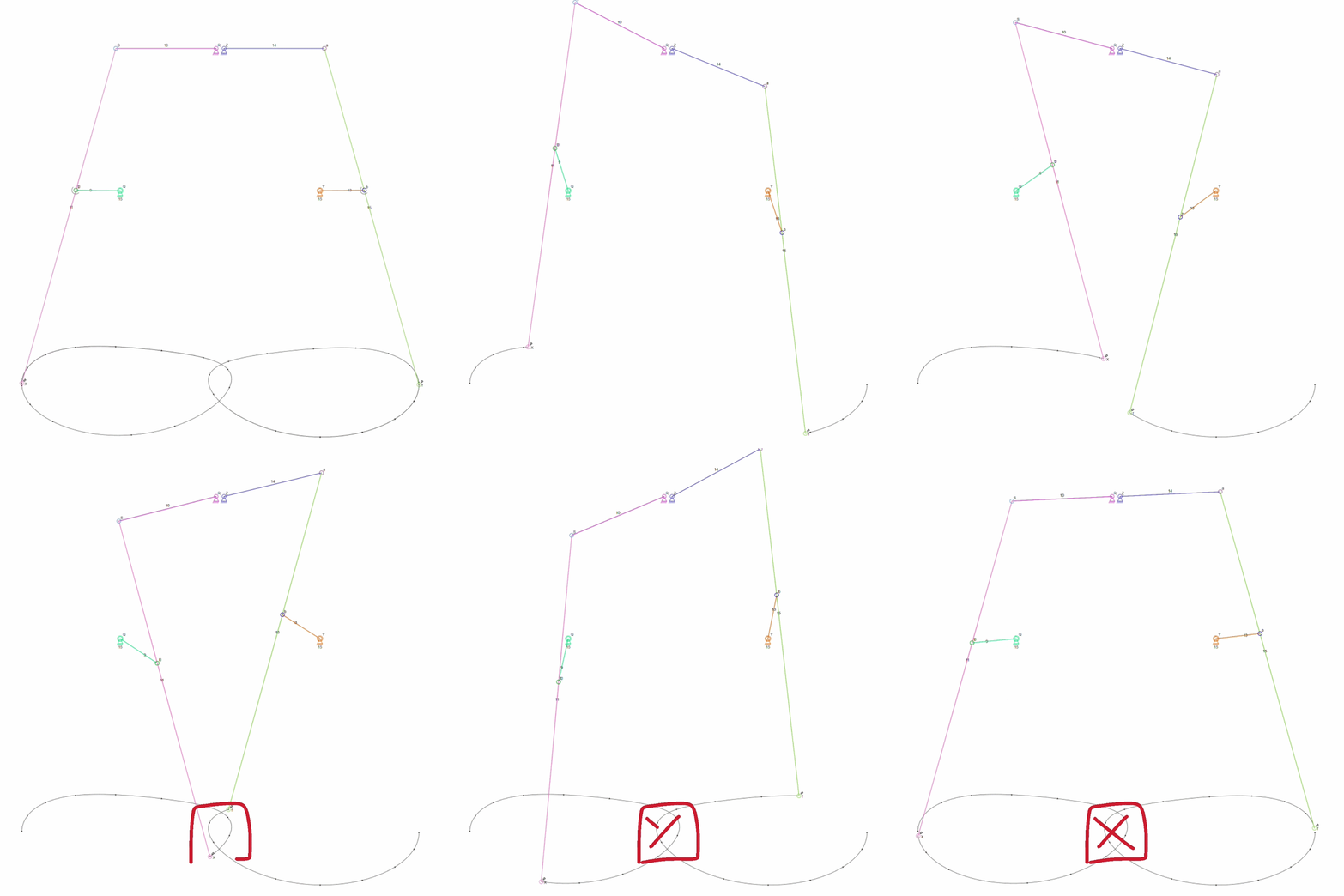
As illustrated in the animations below, the walking mechanisms also had to be slightly improved to implement higher legs without causing leg shocks or creating an unnecessarily long vehicle. Another option was to reduce the length of the rotating arm; however, this would also lead to a reduction in step height, which would have diminished its obstacle-climbing capabilities.
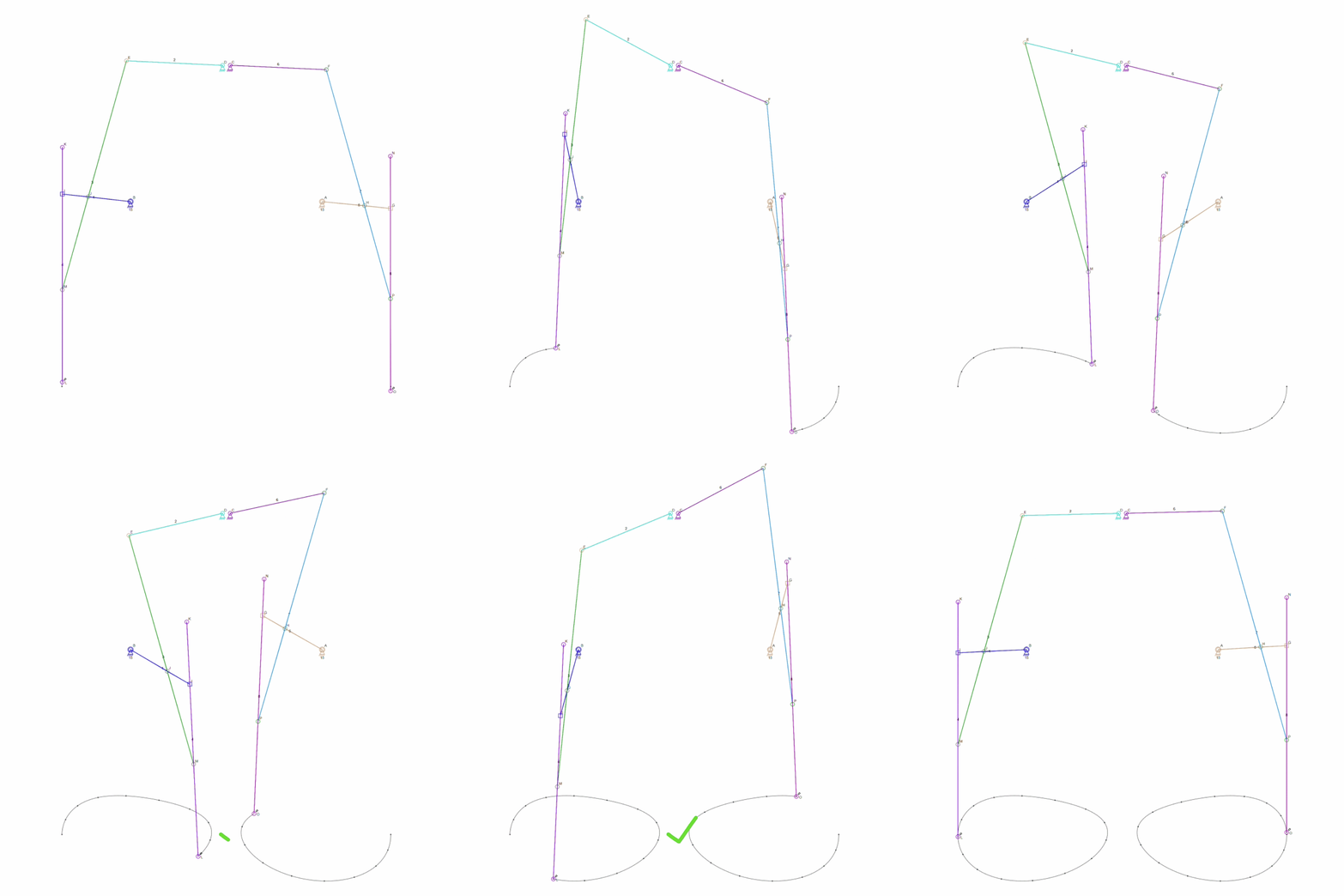
At this stage, the design was leaning toward the Star Wars universe, bringing inspiration from one of its most iconic vehicles: the AT-AT walker, with its striking impression of a gigantic, slow, yet unstoppable walking machine. Yet, a few attempts to make the walker larger, heavier, and with longer legs quickly showed that the walk was becoming increasingly chunky... Adding shock absorbers, as shown in the video below, wasn't satisfying either.

From there, mainly two main paths seemed possible :
1) Applying a more refined walking mechanism such as the fabulous Theo Jansen's Linkage, or creating a new one, to obtain a smoother gait. In this matter, I discovered a VERY inspiring website : https://www.diywalkers.com/.

Overall, I decided that all these mechanisms — which I really admire and love to watch ! — were not quite suitable for the mechanical vehicule I was aiming for, i.e. able to give this feeling of a giant sci-fi machine. In addition, they require a significant number of interconnected bars, which ultimately leads to slightly shakier assemblies when using LEGO, while also limiting the height that can be reached.
2) Relying on the programming capabilities of the Lego Hub : it is possible to do some basic programming to sequence the steps for instance, or generate different rotational speeds over time. However, such an approach does not feel robust and would require regular adjustments and synchronisation to work properly. While it is probably possible to achieve something more autonomous using of a rotation sensors and Python coding with Lego Mindstorm elements, this is not my field of interest and I prefer relying on purely mechanical solutions.
Trodbot Machine Principle - www.diywalkers.com
Third Option : Variable Gear Mechanisms
A solution that did not pop up immediately was to introduce variable gear mechanisms such as the ones I found on this other inspiring website : https://www.armure.ch/WALKING.htm. The idea here is to slow down the leg movement when the steps are down and accelerate the movement when the feet are not touching the ground. In the example below, it allows a Jansen's walking machine to walk with only 4 legs (instead of the usual 8) because only one leg lifts at a time while the other three maintain enough stability on the ground. The overall walk is very elegant.


For my specific case, these type of gear mechanisms offered a different advantage. The goal was not to reduce the number of legs, but to smooth out the gait while maintaining a reasonable speed by:
- reducing the feet’s velocity as they approach the ground;
- transfering the weight from one foot to the other before the walker "looses too much altitude".
Unfortunately, LEGO does not produce any gear shaped for that kind of purpose ! Altough there exits one third-party manufacturer that offers a whole range of specialized gears—such as oval-shaped or Nautilus gears—my objective is to use only official LEGO bricks for as long as possible. So, I spent some time trying to figure out how to reproduce variable speed mechanisms with standard gears. Luckily, I finally found what seems to be the only page on the internet suggesting a suitable solution for that purpose, under the name "Eccentric Variable Gear Train".
Below, you can see how this gear train works. It transforms a constant rotational speed into a variable rotational speed, using only standard gears.


When applied to a simple prototype, the strong effect on the walking kinematics is already visible. In particular, the change of the load-bearing leg occurs when the descending leg is at about 120° and the ascending one at about 240°, instead of 90° and 270° respectively, as would be the case without a variable gear train.
www.armure.ch/WALKING.htm
(Almost) Final Design
Combining these variable gear mechanisms with slightly more refined leg designs results in the following kinematics, which proved to be relatively satisfying when implemented in a LEGO walker. This approach allows for a much smoother walk, especially when using longer legs.
Note: When building a larger—and therefore heavier—model, shock absorbers proved to be a valuable addition. They help reduce the vibrations caused by the contact between the feet and the ground.

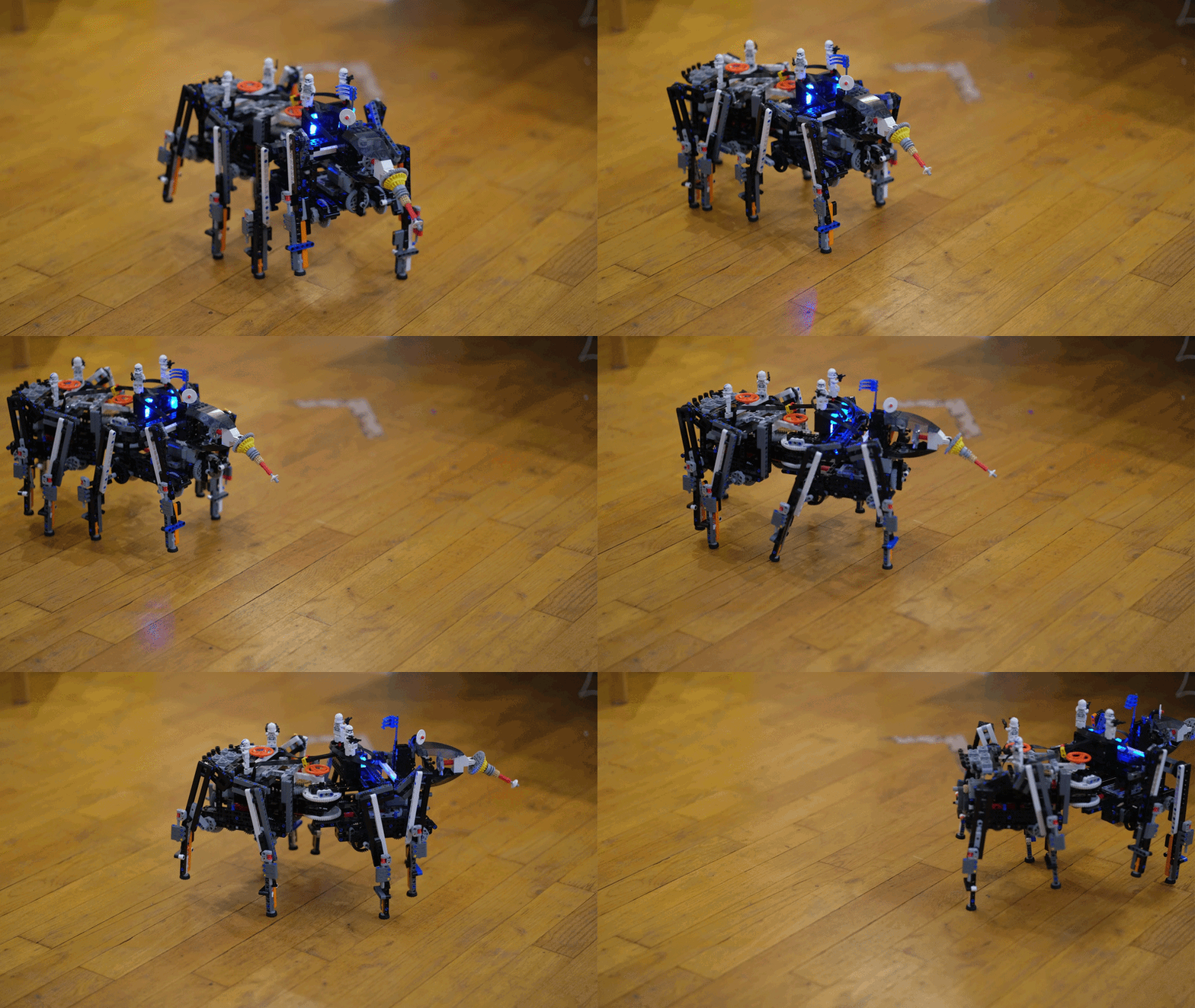
Below, you can see the third iteration of what I like to call the "Planet Explorer". The first iteration had a design that one could probably describe as a "Darth Vader Personal AT-TE". The second iteration already embraced the "Planet Explorer" concept, with the intention of submitting it to the Lego Ideas website. This third version features a slightly improved design, longer steps, and reinforced middle legs to better support the weight.


Also, as shown in the below experiments, the design is quite stable and the high steps allow to overcome large obstacles:
Final Design (at least for now)
Following advice from fellow LEGO enthusiasts, I spent some time refining the overall design. Apparently, "mechanical features are not everything".
Inevitably, this also added significant weight to the model, which can quickly become an issue for mechanical walkers. First, while the motors are good, they can struggle when the required torque becomes too high. Second, since LEGO parts are made of plastic (excellent plastic, though), the mechanical stress they can handle is limited, while mechanisms like lever arms can be very demanding.
To address this last difficulty, I decided to reduce the main lever arm and slightly adjust the position of some others. This allowed me to maintain the same step lengths while reducing the height variations.


To see the final "Planet Explorer" in action, you can go back to the top of this page. And below, let’s return to the initial purpose of this website with a bit of photography.


© Alexis Wegner 2026. Unauthorized use and/or duplication of this material without express and written permission from this site’s author is strictly prohibited. Excerpts and links may be used, provided that full and clear credit is given to this website with appropriate and specific direction to the original content.